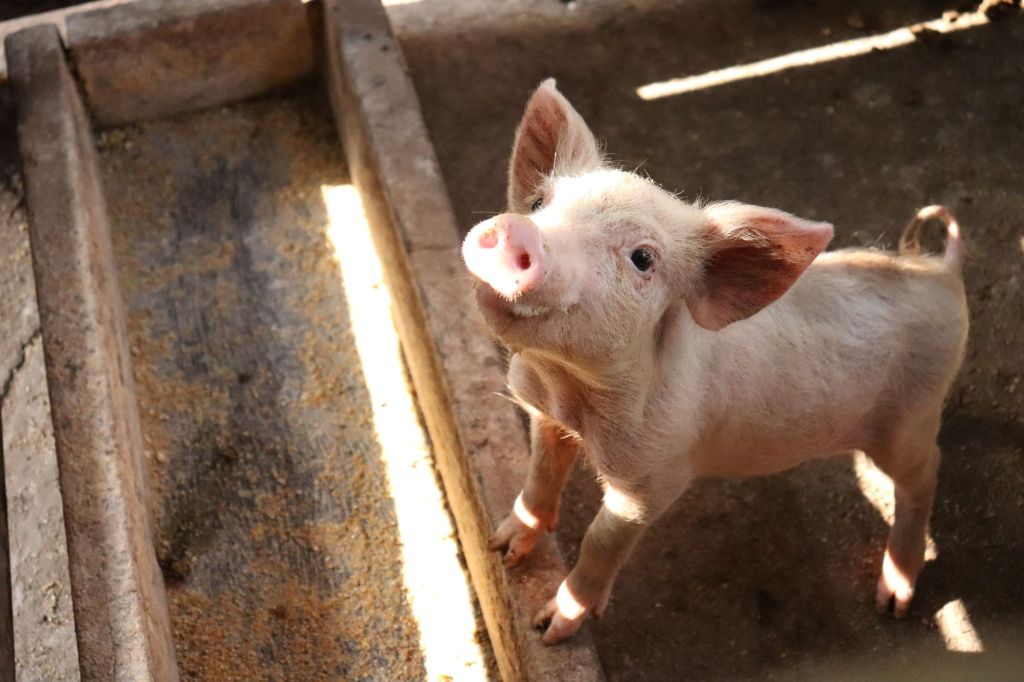
I used to worry a lot about which words of mine might cling in my kids memories. I have some exceptionally unpleasant memories of my mother, for instance, I remember that she called me pigheaded when I was seven years old. This sent me into a wild tizzy at the time and I had no idea what she was actually saying. I first thought she meant I looked or sounded like a pig and I was deeply offended in a really durable way. I also knew that she considered Nixon to be a pig, so even if it the comparison wasn’t literal, it was definitely bad. Sure, pigheaded is still an insult, but pigheaded is just a meaner way to say stubborn, after all.
Her mother never scolded or insulted me that I can recall, and I can remember being quite sad to realize that my only memory of my great-grandmother was that she was deaf and always asked me about the price of cabbages, even though she couldn’t hear my answer. I tried to know the price of cabbages to be able to try to tell her when I saw her.
Now I wish I could ask her how she felt about having six kids and if she ever had beef with Jesus. It’s unlikely she would have admitted if she did.
Not all of my sticky memories are verbal. I think of my brother every time I wash drinking glasses. It’s a nice memory and he’s only eighteen in it, a charming and unlikely prom king. Even now, he has never called me names and certainly not pigheaded. What a gentle man.
I am fairly certain that I didn’t insult my children, not seriously anyway. I think I may have called them banshees from time to time or affectionately referred to them as my little monsters or little potatoes and so on. I’m sure I complained that they were wearing me out, but that’s just a statement of fact, not an insult.
A few times, but not often, my grown kids will repeat my words back to me without realizing, like, “If they care about it, they’ll give it attention,” or, “If you have to make that much noise, can you do it in another room?”
It’s easy to be hung up on the words, but what kids soak up from us is so much more. I see mirrored behaviors and tactics, and while some of them have tried to construct their own worldview from scratch as much as possible, I still see patterns I sketched for them. Mostly for the good, I note with skeptical relief.
There is a solid practicality and a directness that I treasure in them, a vaguely Scandinavian outlook that is improbable rather than cultural. They try to nurture other people without pressuring them and whenever anyone is inconsiderate the reaction is a wild tizzy befitting an unnatural trigger.
Yet, the only saying of my motherhood that I know has persisted as such is “Potty Shoes.”
My younger ones in particular gleefully employ this saying whenever two of more of them are leaving a house. It means exactly what it sounds like, a reminder to pee and put on some shoes before you go out. Nothing derails an outing as fast as having one person need plumbing or footwear.
I knew moms of one or two kids who had fastidious rituals to ready their kids for leaving the house, but I would never have gone anywhere if I insisted on immaculate braids and polished noses. I nagged about the basics on a schedule and relied on their vanity to eventually take over the hair care. I rarely had to point out that anyone was too stinky for the van.
But Potty Shoes had another important meaning. It meant that departure was imminent. They might be notified and reminded we were leaving, but would often just use this information to nag me rather than to get themselves ready. I would be packing snacks or closing windows while little potatoes were tugging on me, “Can we go now?”
Being rushed is one of a few things that will launch me into a wild tizzy, even now.
As the kids got a bit older, we arrived at an understanding. Instead of asking me if we could leave yet, they were supposed to ask me if they could help me get more ready. In that way, the list of things like refreshing the dog water or finding sunglasses could get delegated to the team.
When I said “Potty Shoes,” the responsibility for delaying departure was squarely on those that could not find a second shoe or an open bathroom for themselves.
So, while it’s not a lofty message, it’s certainly better than being pigheaded for all time.
Love,
yermom
If you want to, you can buy my book, Don’t Eat Your Children!! Word is that it is on Hoopla, although I can’t tell because my library doesn’t use the Hoopla book section. Let me know if you can borrow it!! In those situations it should be FREE, because libraries are great!!
If you would like to support my mostly free writing, please consider a subscription on substack or one of the many options on the page about loving me back.


Waddaya think?