I think about suburban decay a lot these days. My neighborhood is a monument to the 1950s–not ancient enough to have real mystique. Since it’s not really ancient, somebody living still knows what all the special features were meant to do. There are remnants of pulleys and clothesline anchors and excavators will surely find glass fuses that were once essentials for the junk drawer. If you squint, you can imagine all the chain link as it was seventy years ago, shiny and new and upright, making good neighbors better.
One of the notable features of our neighborhood is an abandoned pet cemetery. It’s not tucked away in a spooky hillside, but right on a main thoroughfare, so as you walk along looking at the variety of brick duplexes and small brick houses that are sprinkled between sturdy tendrils of brick town homes, you’ll see a block devoted to tiny headstones and giant trees.
Some genius bought the cemetery property to establish a business only to find it has no space left and a vocal opposition to its renovation or disturbance. This case study is all you need to know to understand why Baltimore is mostly rotting in place. It’s not just a matter of money, but of public enthusiasm for preservation or change. Both of these are pretty rare, I think.
I understand the preservation drive, keenly. My elementary school was a beautiful brick building with mile high windows and sweeping staircases. It was the first place I felt a love of architecture. You could picture it like Hogwarts and you’d be both exactly right and totally mistaken. Somewhere I found a record that it was built in the 1920s–preposterous but probably true. Apparently it wasn’t Victorian, but built by people who remembered Victorians.
The beautiful old school was demolished in 1976 to be replaced by the soulless husk of an energy efficient building. The day before it was completely torn down, my patient friend and I burgled and stole some mementos, including a very old Poe collection and a brick.
I have no idea what became of the brick. It’s a pretty stupid souvenir, but somehow I always do that. I have a great many non-anonymous rocks also. I bring them home from hikes and sometimes far away visits to plonk them down in my yard until I forget which is which and where was there.
I bet there is a great German word for ephemeral, dead-end sentimentality.
Having respect for the past is a bit like having respect for cemeteries and other monuments. It requires memory and imagination to be haunted by a place. Most people see green space as a place to walk and picnic and would not think it disrespectful to have a party on a battlefield. Maybe it’s not truly disrespectful if you don’t remember the battle. It may feel disrespectful to those who do remember, but then it’s up to them to point at the weeping marble statues and explain that they are sentinels of the sadness you didn’t notice.
Maybe we can let it go and just enjoy the lovely breeze in the pasture with all the weird stones.
Maybe progress is wanting something different instead of accepting the same thing in different shapes. Accepting the same thing in different shapes is more like fashion than progress.
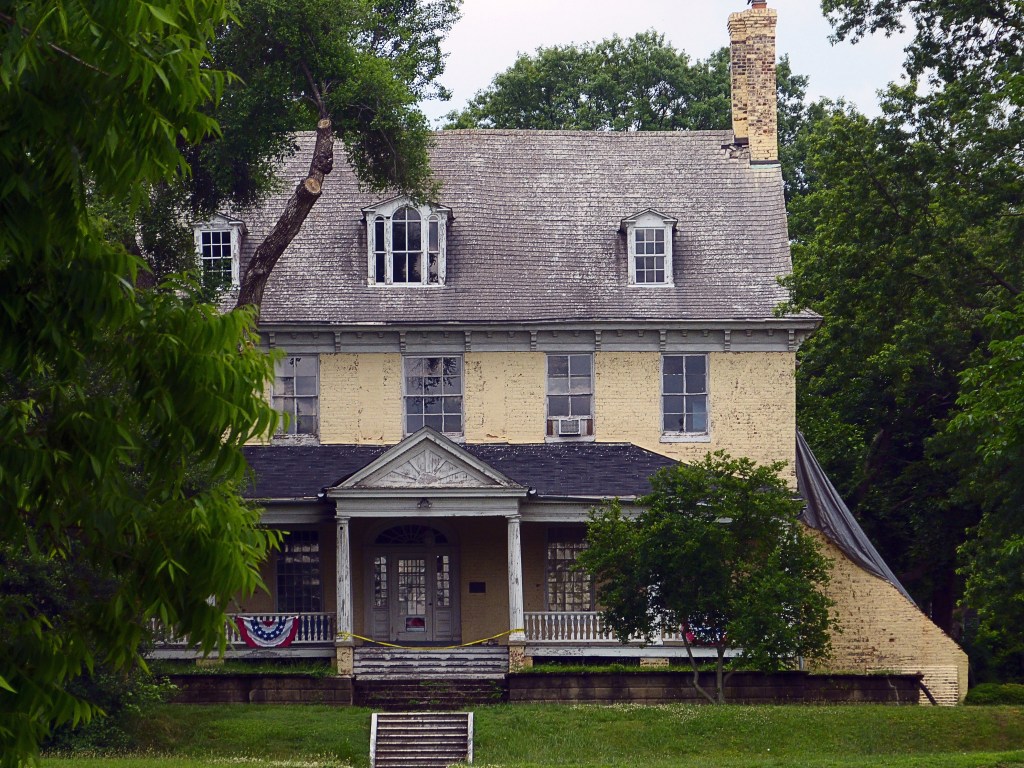
In one of my ancestral home towns, there is a spectacularly decaying mansion. It was being reclaimed by the Earth pretty decisively the last time I saw it.
When my grandparents were living, they were delighted to be invited to a nostalgia tea at Bostwick. I didn’t go and I’m pretty sure I wasn’t invited to anything grand.
Bostwick stood high on a hill, and I remember mostly being envious of the garden space. It’s easy to have lust for gardens when you don’t have to tend them. Every old building in town had a rumored tie to the underground railroad or cellar shackles that had to be removed because of modern monsters.
What I didn’t know is that Bostwick most definitely had a debt to slavery. It was built in the mid 18th century with a view of the port where the slave ships landed. It was the harbormaster’s house, so a prominent beneficiary of all the trade that would ruin the town.
People wrote about hating the house, back in the day. It was poorly designed and drafty and unsuitable. All it’s proportions are miscalculated and I’m sure the addition of modern plumbing just made everything worse, creating more lopped-off rooms and weird crevices.
Last I checked, the house was owned by the town. This is an interesting turn, because last I checked, the population of the town was mostly descendants of people brought in on those ships from hubs of slavery business.
I can picture a budget meeting where no one suggests spending money on the crumbling mansion on the hill. If my town can’t be bothered to hire someone to weed and repair old pet gravestones, how is that town to be bothered to hire anyone to preserve a monument to oppression?
Since it’s peculiar buttress collapsed, there are some loose bricks, but I’m not interested, either.
Love,
yermom
Update: This house is so bad, it has attracted the attention of students as an example of the worst surviving building errors: https://today.umd.edu/historic-homes-pain-buttress-1dc78dd6-2cb0-493c-a8e9-a93653329331
A bit more historical detail: https://www.hyattsvillewire.com/2018/07/27/bostwick-house-bladensburg/
So, yeah, if I haven’t mentioned it elsewhere, Bladensburg is “The Port” and Bostwick inspired the big brothel. The brothel is a superior structure, for fiction. Read all about it, or not!!

Inoculation Station, Inc.
Tofu needs his shots. Don’t tell him. He doesn’t know rabies is a huge drag and something he totally doesn’t want. We’re going to see a new vet, since the old vet is busy. We are so adventurous, but he also doesn’t know anything interesting is afoot. Being a dog would not be the worst thing, I bet.
$3.99


 askyermom
Waddaya think?